
AI and Automation Workflow Monitoring in 2026: A Guide to Achieving Smarter Automation

In today’s fast-changing digital transformation landscape, AI workflow monitoring has become a critical component of any successful automation strategy. As organizations expand automation across multiple departments and enterprise systems, having clear visibility into AI-driven and automated workflows is no longer optional—it is essential for maintaining reliable and efficient operations.
As automation environments grow more complex, businesses need real-time monitoring, predictive insights, and quick detection of workflow issues to ensure processes run smoothly. This is where expert implementation and monitoring frameworks become crucial.
Companies like Q3edge Consulting Pvt Ltd help organizations implement and manage intelligent automation environments that provide greater visibility and control across automated workflows. By combining Artificial Intelligence, Robotic Process Automation (RPA), and advanced workflow monitoring techniques, Q3edge enables enterprises to track automation performance, identify potential disruptions early, and continuously optimize their processes.
Instead of reacting to automation failures after they occur, organizations can move toward a proactive, data-driven workflow management approach that improves efficiency and operational stability.
Key Highlights
- AI workflow monitoring is essential for managing complex and large-scale automation environments.
- Real-time monitoring and predictive insights help detect issues before they impact business operations.
- Automated monitoring systems provide greater speed, accuracy, and scalability compared to manual oversight.
- A centralized monitoring approach enables complete visibility across RPA, AI, and enterprise systems.
- Organizations can maximize automation ROI by continuously optimizing workflows through intelligent monitoring.
How Q3edge Supports Intelligent Workflow Monitoring
By combining AI-powered analytics, process expertise, and automation technologies, Q3edge Consulting Pvt Ltd helps enterprises:
- Detect workflow issues early
- Prevent automation failures before they affect operations
- Continuously improve automation performance
- Maintain compliance and process transparency
- Maximize the value of automation investments
In simple terms, the future of successful automation depends on strong AI-driven workflow monitoring. With the right automation strategy and expertise, organizations can gain better visibility, stronger control, and improved performance across their automated operations.
What Is AI Workflow Monitoring?
AI workflow monitoring refers to the continuous tracking, analysis, and improvement of automated processes using technologies like Artificial Intelligence, predictive analytics, and intelligent alerts. The goal is to ensure that automation workflows run smoothly, remain secure, and deliver maximum operational efficiency.
As organizations increase their use of Robotic Process Automation (RPA) and other automation technologies, monitoring these workflows in real time becomes essential. Experts at Q3edge Consulting Pvt Ltd help businesses implement intelligent monitoring frameworks that provide visibility into automation performance and enable continuous improvement.
The Core Foundations of Workflow Monitoring
Effective AI workflow monitoring is built on the ability to deliver real-time operational insights. As automation ecosystems grow more complex, organizations need strong monitoring capabilities to maintain control, reliability, and performance across their digital processes.
Modern workflow monitoring enables businesses to:
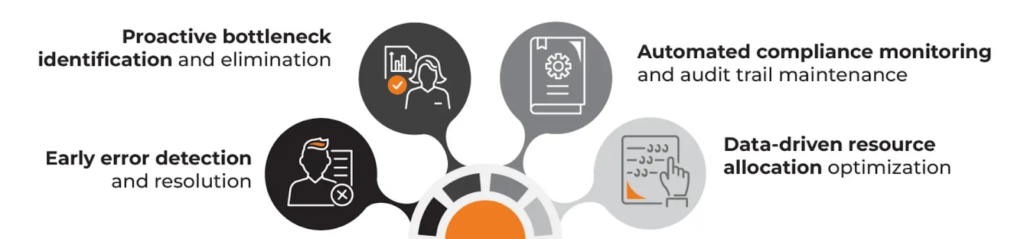
- Identify and eliminate process bottlenecks before they impact productivity
- Detect and resolve errors early in automated workflows
- Maintain compliance through automated monitoring and audit trails
- Optimize resource utilization using data-driven insights
With the right monitoring strategy, organizations can ensure their automation environments remain efficient, transparent, and scalable as they grow.
Advanced Workflow Optimization Capabilities
With the advancement of Artificial Intelligence, workflow optimization has become more precise and data-driven than ever before. Modern monitoring solutions provide detailed insights into automation workflows, allowing organizations to analyze and improve every step of their processes.
These advanced capabilities enable businesses to:
- Examine individual workflow components in greater detail
- Monitor execution time and key performance indicators
- Improve existing processes using AI-powered insights
- Apply predictive maintenance to prevent workflow disruptions and optimize performance
At the same time, the evolution of automation monitoring has significantly improved error management. By combining Robotic Process Automation (RPA) with AI-powered monitoring, modern platforms can quickly detect issues and provide actionable insights for faster resolution.
Modern platforms leverage AI to:
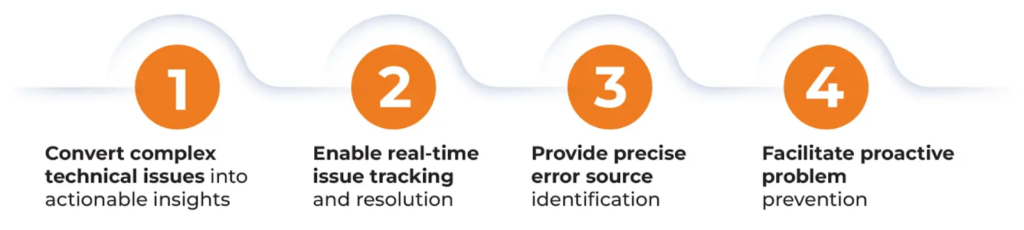
- Turn complex technical problems into clear, actionable insights
- Track and resolve issues in real time
- Identify the exact source of errors quickly
- Prevent problems before they affect operations
Integration is another key aspect of effective AI workflow monitoring. Modern solutions are designed to connect smoothly with existing enterprise systems such as ERP and CRM platforms. This seamless connectivity provides complete visibility across the entire technology environment, ensuring that organizations can monitor and manage workflows effectively regardless of their complexity.
Another important feature of advanced **Artificial Intelligence-based workflow monitoring is graphical visualization. These interactive process maps convert complex automated workflows into easy-to-understand visual journeys, helping operators manage automation more efficiently.
With these visual dashboards, teams can:
- Easily switch between different operational views
- Focus on critical process steps and performance details
- Understand the overall automation landscape
- Make faster, data-driven decisions
Manual vs Automated Workflow Monitoring: What’s the Difference?
Manual workflow monitoring relies on human teams to check system performance, review workflow status, identify failures, and resolve issues. While this traditional method can work for small environments, it often becomes slow and resource-intensive as automation grows. It also increases the chances of delays and human errors.
In contrast, automated workflow monitoring powered by Artificial Intelligence continuously tracks workflows and system performance in real time. These systems can automatically detect issues, send proactive alerts, predict potential failures, and provide full visibility across multiple platforms with very little manual effort.
As a result, organizations benefit from faster problem detection, improved efficiency, and more reliable automation operations.
| Capability | Manual Monitoring | Automated (AI) Monitoring |
| Error Detection | Issues are identified only after they occur | Detects issues in real time with predictive alerts |
| Scalability | Limited ability to manage large or complex workflows | Easily scales to handle hundreds or thousands of workflows |
| Accuracy | Prone to human errors and inconsistencies | Delivers high accuracy using AI and machine learning insights |
| Compliance Tracking | Requires manual tracking and documentation | Automatically generates logs and audit trails |
| Speed of Resolution | Slower response due to manual intervention | Instant alerts enable faster resolution and automated fixes |
| Cost Efficiency | Higher costs over time due to manual effort | Reduces costs through automation and efficiency gains |
| Resource Requirement | Requires significant human involvement | Minimal human effort needed for monitoring and control |
| Visibility | Limited and fragmented across systems | Centralized view through a unified monitoring dashboard |
Real-World Impact and Evolution
The true value of automation workflow monitoring shows up clearly in real-world scenarios. Take a global financial services company that upgraded its monitoring approach—suddenly, everything changed. They gained complete visibility into their automation, caught errors instantly, reduced bottlenecks, and used resources way more efficiently.
And this space isn’t slowing down. It’s evolving fast with trends like predictive analytics, deeper integration of Machine Learning, industry-specific monitoring solutions, and stronger security and compliance frameworks.
Benefits and Business Impact
If a company is serious about getting the most out of automation, strong AI-powered monitoring isn’t optional anymore—it’s essential. Here’s what it brings to the table:
- Better operational efficiency: AI removes inefficiencies, reduces manual work, and keeps workflows running smoothly.
Result: Faster processes and higher productivity. - Proactive issue resolution: Instead of fixing problems after they happen, systems predict and prevent them.
Result: Less downtime and fewer disruptions. - Stronger compliance and governance: Automated logs and audit trails make compliance easier.
Result: Lower risk and stress-free audits. - Smarter resource allocation: AI analyzes usage patterns and suggests optimal resource distribution.
Result: Reduced costs and better performance. - Predictive optimization: Systems can forecast delays or failures before they happen.
Result: Problems solved before they even start. - Complete visibility: A single dashboard tracks bots, AI agents, APIs, and enterprise systems.
Result: Full control over automation operations. - Lower operational costs: Fewer errors and less manual intervention mean major savings.
Result: Higher ROI from automation. - Scalability: Easily manage hundreds or even thousands of workflows.
Result: Confident, large-scale automation growth.
How AutomationEdge Solves Workflow Monitoring Challenges
AutomationEdge simplifies complex workflow monitoring by giving businesses real-time visibility, predictive insights, and intelligent alerts—all in one place.
Here’s how it stands out:
- Unified monitoring: Brings ERP, CRM, banking, HR, and legacy systems into one dashboard, removing scattered tracking.
- Predictive error detection: AI spots issues before they happen and can even trigger automatic fixes.
- Smart alerts: Converts technical problems into simple, actionable insights so teams can act quickly.
- Visual workflow mapping: Interactive dashboards show the entire workflow journey, making bottlenecks easy to spot.
- Easy integration: Connects smoothly with existing systems without major changes.
- Industry-ready templates: Prebuilt solutions for sectors like banking, healthcare, and telecom speed up implementation.
Conclusion
If companies want to stay competitive, they need to level up their monitoring game. With AI-driven insights, real-time visibility, and proactive problem-solving, businesses can take automation from “working fine” to “running like a machine.”
The future is simple: the more control you have over your automation ecosystem, the better your results. And those who adopt advanced monitoring early will be the ones leading the next wave of intelligent automation.